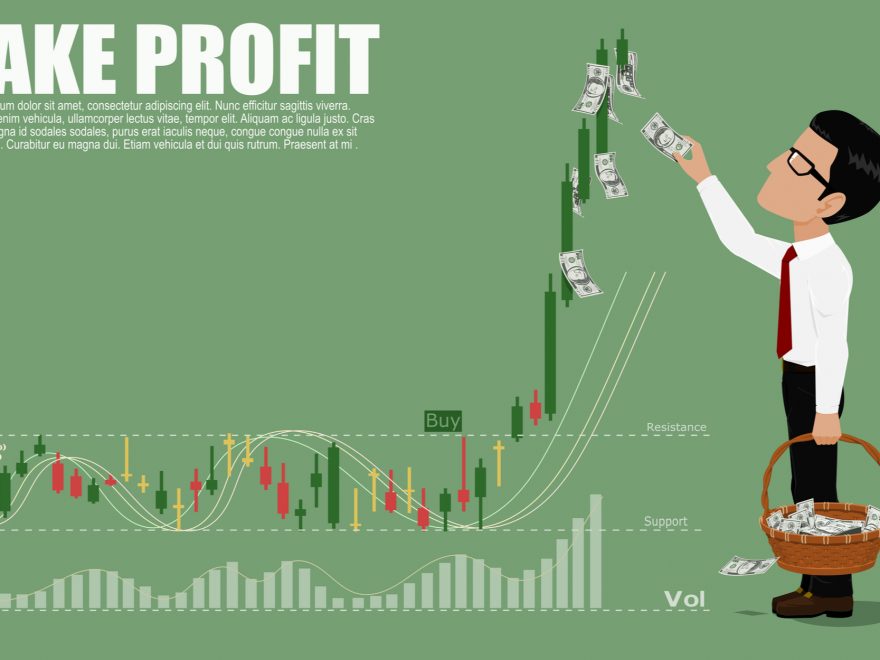
Naked short selling is the selling of a stock without prior ownership of the stock. In other words, one sells a stock which he does not owned or has not borrowed. This is often done in an attempt to profit from the difference in the selling price or buying price. For example, if you sold 1 lot of a counter at $1.00 and buy back 1 lot of the same counter later at $0.90, you will gain a profit of $0.10 per share or a total profit of $100.
In hard times, take cover
By Jason Ong
(Taken from the Sunday Times on 24th May 2009)A client called me recently requesting a review of her insurance policies. She wanted to ensure she is sufficiently covered with the right type of health insurance in case she loses her banking job. I went through her files and assured her that she and her family are adequately protected with the plans that we implemented last year.
We all know that if you are not covered and have an accident or develop a major illness, it can be financially devastating. The good news is that a comprehensive medical insurance plan can help defray most of the hefty hospitalisation expenses.
If comprehensive health insurance is so important, why then do so many people still fail to insure themselves adequately? In the course of my work, I find that many still have the following misconceptions that keep them from getting a comprehensive medical plan. If you believe in any of them, it's time to learn more about how a proper insurance portfolio can help protect you and your family.
Myth No. 1: My company pays for my medical bills so I don't have to worry about it
Truth: An employer-paid group medical insurance policy covers you only while you are on the job. In Singapore, most group medical plans are still not portable, and the maximum limit per policy year is usually low at between $30,000 and $80,000. There is also a maximum limit per lifetime, ranging from $90,000 to $250,000. It's worth noting that most group policies will be terminated once an employee retires or is above 65. Therefore, you should consider getting your own health insurance such as a private Medisave-approved integrated shield plan early, while still healthy. It's a big risk to delay the cover until you have retired as your health may deteriorate and make you uninsurable.
Take for example my client, Ms Chew (not her real name) who is in her 30s. She was a promising marketing manager with an American multinational company. Last year, however, she was diagnosed with renal failure. Regular renal dialysis hindered her work so she was forced to quit. In her case, she lost not only her income, but also the medical cover she relied on. To make matters worse, she is now uninsurable.
Myth No. 2: I have bought enough insurance
Truth: Many people buy a few life insurance policies and believe that they are well protected. They cannot be more wrong. Many still believe that buying whole life critical illness policies will be sufficient to cover hospitalisation expenses. However, it should be pointed out that different insurance plans are designed to cater to different protection needs.
The purpose of a critical illness plan is to cover the loss of income in the event that you are unable to work due to a critical illness. It will pay a lump sum if you are diagnosed with one of the 30 critical illnesses. Once you are awarded with a claim, the policy is typically terminated.
To cover hospital stay and surgical costs, you need to buy a private shield plan or a hospitalisation and surgical policy.
Myth No. 3: I already have Medisave and MediShield so I should be okay
Truth: Medisave is your own money, and not an insurance scheme. The current Medisave cap is $34,500. At the current rate of medical inflation, it's likely that any major surgery would wipe out one's Medisave balance if he or she just depends on Medisave to pay for the medical bills. Instead, Medisave should be used to pay for health insurance premiums.
MediShield, on the other hand, is a national catastrophic medical scheme that is intended to cover expenses at Class B2/C wards. With recent reform, MediShield is now paying out more for large Class B2/C bills. However, it's worth highlighting that the maximum coverage age for MediShield is 85. If you live beyond that, you will be on your own. In addition, MediShield will be insufficient if you are treated in private hospitals or Class A wards.
Myth No. 4: I am still young and healthy
Truth: This is by far the greatest myth of all. Do not take your good health for granted as you never know when you may fall ill. While the middle-aged group is more susceptible to medical conditions such as high blood pressure, diabetes, cancers and heart diseases, much has been written about young people being hit with severe health problems, causing great financial difficulties to the family.
Unlike investments, insurability is the reason you need to buy insurance early when you are young and healthy. You must get it before you need it, because if you don't have it when you need it, you may not get it any more.
Of late, I have been dealing with an increasing number of clients who are categorised as substandard or uninsurable. For instance, if your Body Mass Index (BMI = weight in kg ? square of height in m) is above 30, at least one local insurer will not consider your application. Also, if you are below 35 and have a combination of high cholesterol and high blood pressure, your application may be denied.
Myth No. 5: I don't need to buy insurance for my children and stay-at-home spouse
Truth: This may help explain why many of the uninsured are housewives and children. Some may rely on their parent's or spouse's company group plan, which may be rendered useless in the event of divorce or death of the working parent or spouse.
In May last year, my 18-month-old daughter was admitted to Mount Alvernia Hospital for high fever and stomatitis. The bill for the one-day hospital stay came to $1,116. In more severe cases, the average costs for treating major illnesses such as colon cancer and leukaemia can be well over $100,000 and $400,000 respectively. Fortunately for me, my daughter is covered under a private shield plan.
In difficult times such as these, a good private shield plan is all the more important. In insurance planning, the worst time to plan is when a medical crisis happens.
The writer is an adviser of Professional Investment Advisory Services. The views expressed are his own.
Singapore is one of the most expensive places in the world to own a car. By breaking down the different components that make up the basic cost of the car, it is not that difficult to understand why it is so.
It is only recently that I start to realize that it is of utmost importance to determine if a person, who is offering some form of service to you, has a vested interest in the service that he is providing. I never really thought much of it in the past but it is when I need to seek advice regarding some investment and financial issues, I want to be absolutely sure that the advice I am receiving is really helpful and beneficial.
A CEO of a listed company telling you about the excellent growth prospects of his company. He owns a lot of shares in this company and if investors believe in him, share price will rocket and the value of his shareholdings will increase.
SIA CEO defends divestment of SATSI have been thinking about what is the catch for this deal. SIA is giving its shareholders 730 SATS shares for every 1000 SIA shares they are holding. Using the SATS closing price of $1.48, these 730 shares are worth around $1080. Thus the yield is around 9.3% computed using the SIA closing price of $11.60 and that is very generous in my opinion. However, this is still subjected to the approval of the shareholders at the EGM.
By NISHA RAMCHANDANI
(Taken from the Business Times on the 19th May 2009)SINGAPORE Airlines (SIA) chief executive Chew Choon Seng yesterday defended the airline's proposal to divest its 81 per cent stake in subsidiary Singapore Airport Terminal Services (SATS).
The move will unlock shareholder value, give shareholders a direct interest in SATS without them having to put their hands in their pockets, and allow the airline to concentrate on its core business, he said.
Speaking to reporters on the sidelines of an analysts' briefing, Mr Chew said: 'Now is an appropriate time for us to unlock the shareholder value and let the shareholders have direct ownership of a profitable and independently listed subsidiary. Also, SATS shareholders have been asking for more liquidity of the shares.'
Under SIA's proposal, its stake in SATS will be divested in specie, with up to 730 SATS shares be distributed for every 1,000 SIA shares held, pending shareholder approval at an extraordinary general meeting.
This will allow SATS to pursue its own opportunities, Mr Chew said. And SIA will be able to concentrate more on its airline and aircraft maintenance, repair and overhaul businesses.
SIA Engineering Company (SIAEC), is 'strategically more important . . . to the operational integrity and reliability of our flying operations,' Mr Chew said during the briefing in response to a question on whether SIAEC will be divested.
Financially, the SATS divestment will have no significant impact on equity, SIA said, and its gearing ratio will fall from 12 per cent to 11 per cent.
'This is something SIA should have done a long time ago,' said Kim Eng analyst Gregory Yap, adding that the divestment will improve SATS's trading liquidity.
And while SATS will lose a parent in SIA, it will gain a grandparent in Temasek, he pointed out.
Also yesterday, Mr Chew debunked the idea that SIA will revive discussions to invest in China Eastern in the near term.
'Although longer-term, we still maintain an interest in having the opportunity to participate in the airline business in China; the immediate situation that we have before us, our hands are quite full,' he said.
Meanwhile, SIA will take delivery of five Airbus 380s in the coming months as planned. Two of these will arrive this month. But Mr Chew said that the airline is in talks with Airbus about deliveries further down the line.
'Dialogue is still open and ongoing,' he said.
SIA will also take delivery of seven A330-300s in the current fiscal year.
'We want to continue with our policy of fleet renewal,' Mr Chew said. 'Our strategies are long-term.'
With slumping travel demand having prompted plans to slash capacity 11 per cent in FY 2009-10, SIA will ground 13 aircraft this financial year.
It is also in talks with interested parties about selling some of these aircraft.
'There is interest, but this is not a time where it is easy for people who are interested to raise finance,' Mr Chew said. But still, SIA will work sale leads.
Additionally, three Boeing 747-400s will be returned to lessors, leaving SIA with an operating fleet of 99 at March 31, 2010, versus 103 at April 1 this year.
The reduction in capacity will reduce SIA's fuel expenses in FY 2009-10. About 25 per cent of the group's fuel requirement for the current financial year is hedged, at prices of US$125-130 per barrel.
Separately yesterday, SIA released operating figures for April. Passenger carriage, in revenue passenger kilometres, declined 17.7 per cent year on year, outstripping a reduction in capacity, in available seat km, of 12.9 per cent.
The passenger load factor dipped 4.2 percentage points to 72.2 per cent, while the number of passengers carried dropped 18.2 per cent to 1.29 million.
Overall cargo traffic, in freight tonne km, fell 21.6 per cent in April, outpacing a 16.5 per cent reduction in capacity.
As a result, the overall load factor for SIA Cargo dipped 3.7 percentage points to 58 per cent.
SIA shares peaked at $12.26 yesterday, before closing unchanged at $11.60. SATS closed at $1.48, down seven cents.
It has been a trend these days that the proportion of young couples that chooses private properties such as condominiums or private apartments as their first home, are increasing as opposed to HDB flats. After all, private properties come with more amenities and facilities and there is a certain prestige associated with staying in such form of housing. If the combined income of the couple is less than the HDB income ceiling that qualifies them for certain incentives and schemes, that currently stands at $8000, they may lose out monetarily if they choose to stay in private properties.
This site currently has a Google PageRank of 4 and the majority of the visitors come from search engines such as Google and Yahoo! in search of relevant financial, property and investment information. The readership of this site consists mainly of executives and professionals who are interested in the area of finance, property and investment and residing in Singapore.
As such, marketing your company or brand on this site through advertisements will be a cost-effective way of reaching out to this group of audience. A variety of advertising options are available and these includes graphical banners in different sizes and formats and textual links. The placement of the advertisements on the site can also be tailored to your requirements.
For any advertising enquiries, feel free to contact me at kay@moneytalk.sg
Investors hit by short-sale ruleI wish to bring this article to everyone's attention. Currently, SGX impose penalties on those who carry out naked short selling. But as stated in this article, many of these failed trades are made by retail investors who are selling shares held in their CPF without specifying they are CPF trades or their accounts are not properly linked up to SGX. So if you are selling shares held in your CPF, check your orders carefully before submitting. This mistake is an expensive mistake to make.
New SGX rules impose hefty fines on those who sell shares they don't own
By Goh Eng Yeow, Senior Correspondent
(Taken from the Straits Times as part of an article on 13th May 2009)Investors have been told by the Singapore Exchange (SGX) to pay fines of $1,000 or more within five days of failing to settle their trades.
SOME investors rushing back into the red-hot market have been caught out by new rules on short-selling and heavily fined for selling shares that they did not actually own.
They have been told by the Singapore Exchange (SGX) to pay fines of $1,000 or more within five days of failing to settle their trades.
The penalties were introduced last September to deter 'naked' short-selling during a period of near panic on global bourses.
Such short-selling occurs when a trader sells a stock he does not own or has not borrowed in the hope that the price will fall. This would allow him to pocket the difference.
But the SGX appears to be catching an increasing number of 'innocent' investors who fail to deliver small quantities of shares when a trade is due to be settled three days after it is transacted. The trades are usually 1,000 or 2,000 shares of a blue chip like DBS Bank or SingTel.
When investors fail to come up with the shares at settlement, the SGX has to buy the stock on a specially established buying-in market. It then delivers the shares to the buyer on the seller's behalf - as well as levies a hefty fine.
The number of failed trades has risen sharply in line with the rise in daily market volumes. They have more than doubled in the past month, from 1.4 billion shares to 3.7 billion.
Two weeks ago, the SGX buying-in market attracted trading in about 10 to 15 counters a day. By yesterday, the list of counters traded had grown to 50.
Many of these failed trades have apparently been made by retail investors returning to the market after a long absence. They are selling online shares held in Central Provident Fund (CPF) accounts without specifying that they are CPF trades, or their accounts were not properly linked up to the SGX.
One remisier gave the example of a client fined $1,000 after selling 1,000 OCBC shares online.
SGX has just launched its new website recently and I am not particularly impressed with the new SGX website. I actually prefer the old SGX website as it's easier to retrieve and find the data that I need. The old layout is also less straining to the eyes as there are more colours and the fonts are bigger.
I did some research on the performance of local unit trusts which are focused on Singapore recently and compare it with the Straits Times Index and the performance of the STI ETF. The results proved to be quite interesting and I would like to share it my findings in this article.
The performance of unit trusts is often compared with a benchmark index. Thus, for unit trusts which are focused on equities listed on SGX, the appropriate benchmark would be the Straits Times Index. Any unit trusts that are worth your salt must be able to beat the Straits Times Index if you compare them with an appropriate time frame that is sufficently long.
Using data from fundsupermart, I have selected local unit trusts which are focused on equities listed on SGX and compare them with their annualized returns for the past 5 years against the Straits Times Index. You can see the data of these unit trusts in the diagram below and their annualized returns for the past 5 years are highlighted with a purple box.
Data of selected unit trusts from fundsupermart
So how do the performance of these unit trusts fare against the Straits Times Index for the past 5 years ? You can see their performances in the diagram below.
Out of the 8 unit trusts that I have used as a comparison, half of them managed to beat the Straits Times Index and that is quite decent after all. So the STI ETF is not such a terrific investment after all ?
There is one slight difference which is often overlooked. That one crucial difference is that the Straits Times Index, which the unit trusts are benchmarked against, does not take in the account of the giving out of dividends but the STI ETF does give out dividends.
So how much difference do the dividends play a part in affecting the performance of the STI ETF ? This time round, I calculated the 5 years annualized returns of the STI ETF with the effect of dividends being given out using Excel and it can be seen in the diagram below. If you wish to know more about the calculations, Mike from stistocks-info blog has an excellent article which can be found here.
Do take note that the dividends are adjusted for a stock split and the reason why I did not use a longer time frame was because I only managed to find the annualized 5 years and 10 years data for the unit trusts and the STI ETF was only listed in 2002.
As you can see from the diagram above, if you take into the account the effects of dividends, the returns are very different indeed. So how does that stack up with the performance of the unit trusts once again ?
The result is rather obvious. None of the unit trusts managed to beat the STI ETF when the effects of dividends are accounted for in the 5 years time frame that I selected. Do take note that the performances of these unit trusts are calculated on a bid to bid basis, in Sing dollars, with dividends being 'reinvested' at the dividend date as taken from fundsupermart.
However, 5 years is a rather short time frame to be used to compare between different investments. Preferably, I would use a time frame of at least 10 years but due to the limited data that I had, I can only use a time frame of 5 years. Otherwise, this serves well as a preliminary gauge on the performance of the STI ETF and the unit trusts.
Personally, I'm rather surprised by the results of my findings if the data that I have used are indeed correct. So if you are planning to buy a local unit trust that have their focus on equities listed in Singapore, do make a serious consideration before making your decision.
This post is part of a series of posts that discuss about financial statements in detail. To access the other posts in this series, click here.
One of the main components of a balance sheet will be the non-current assets. Non-current assets are assets which are not expected to be converted into cash or used up within the next year. I have highlighted the non-current assets portion with a blue rectangular box in M1's balance sheet.
Fixed Assets - This represents the M1's infrastructure that can includes land, buildings, factories, furniture, equipment and so on. Fixed assets can also be seen in other financial statements as Property, Plant and Equipment or PP&E in short. If you refer to section 10 of the notes to the financial statements, you can see that M1's fixed assets consist of leasehold buildings, networks and related application systems, application systems and computers, motor vehicles and so on.
License and Spectrum Rights - This represents the rights and licenses that M1 has acquired to carry out its operations. For M1's case, this could refer to the rights and licenses to deploy broadband and telecommunication services. License and Spectrum rights can be grouped under intangible assets, which are more commonly seen in financial statements. Intangible assets stands for assets that are not physical in nature. If you refer to section 11 of the notes to the financial statements, you can see a detailed explanation of this component.
Staff Loans - This component is rather self-explanatory. It stands for the loans that M1 has made to its staff. If you refer to section 12 of the notes to the financial statements, you can see that the loans are related to the purchase of motor vehicles for its staff.
Interest in subsidiaries - This refers to M1's interest in her subsidiaries. Subsidiaries are businesses or companies that are owned by M1. If you refer to section 12 of the notes to the financial statements, you can find out more details about M1's subsidiaries.
In general, these are the main items of the non-current assets in a balance sheet. There can be other components depending on the nature of the industry which the company is in. In my next post, I will be discussing on the main items of the current liabilities in a balance sheet using M1 as an example.